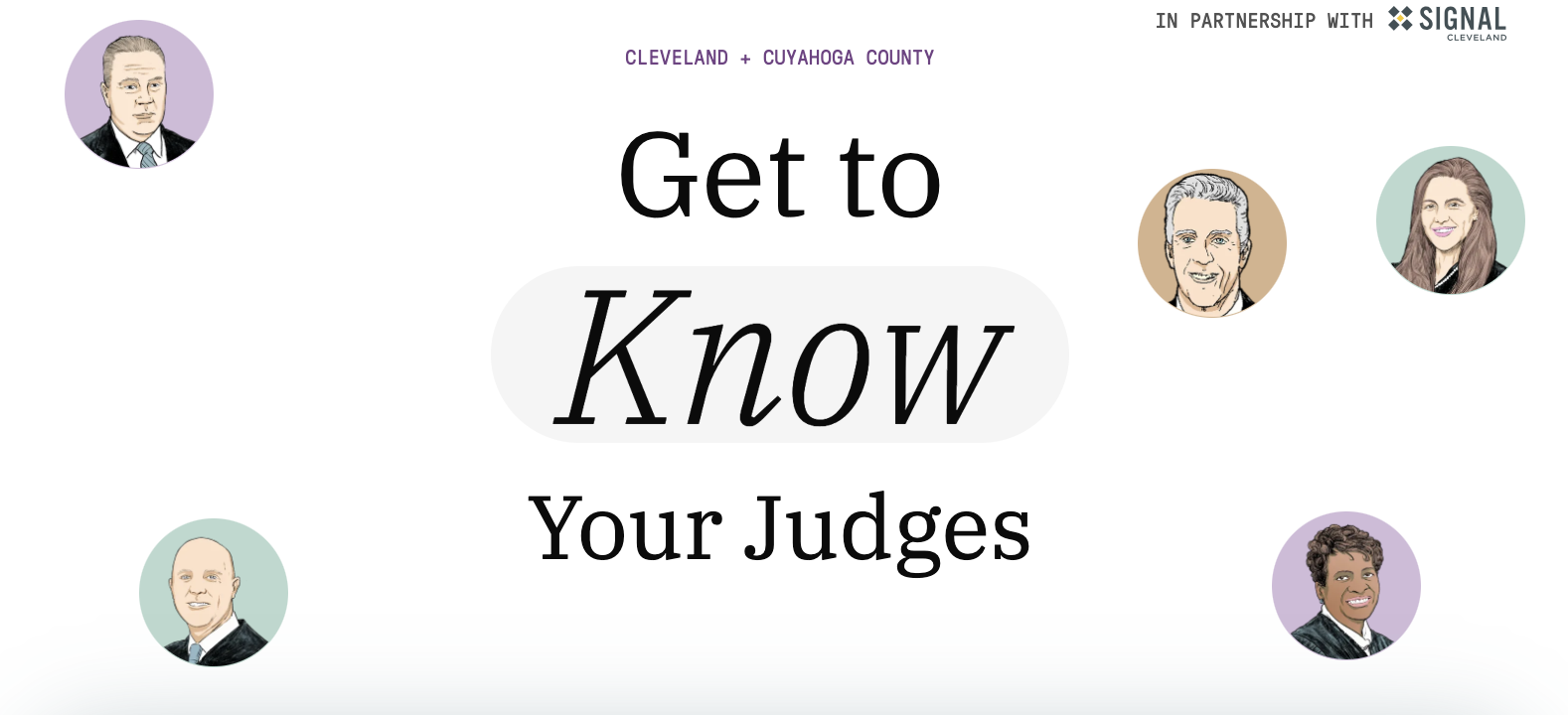
In Cuyahoga County, nearly 30% of residents skipped voting for judges in 2020 — even when they showed up to vote for president. The problem wasn't apathy. It was information. Judges shape everyday life in ways that most ballot coverage ignores: bail decisions, sentencing, family court outcomes. Ahead of the 2024 elections, The Marshall Project wanted to close that gap. The challenge was building something that residents would actually find and use — not just something that technically existed.
I managed the product and the project with Signal Cleveland and the Cleveland Documenters from conception to launch and update. That meant structuring the data collection process, supporting community documenters who gathered publicly available information (financial disclosures, campaign donation records), and making sure the guide was built around questions residents actually had, not questions we assumed they had. We solicited community input at every stage: what to include, how to design it, how to get it into people's hands. The guide launched ahead of the March primary and was updated before the general election.
A real partnership — not a logo swap. Signal Cleveland brought deep community trust. The Cleveland Documenters brought ground-level access: they collected records and surfaced the knowledge gaps that residents actually felt. We also built a distribution strategy designed to reach people who wouldn't find us on their own: flyers at polling sites, bus shelter advertising, and community meetings. Throughout, the design question stayed the same: does this feel like it was built by and for the people it's supposed to serve?
The guide gave Cuyahoga County residents something they didn't have before: a clear, accessible way to make an informed decision about the judges on their ballot.
We received multiple awards in recognition of our collaborative and participatory approach: