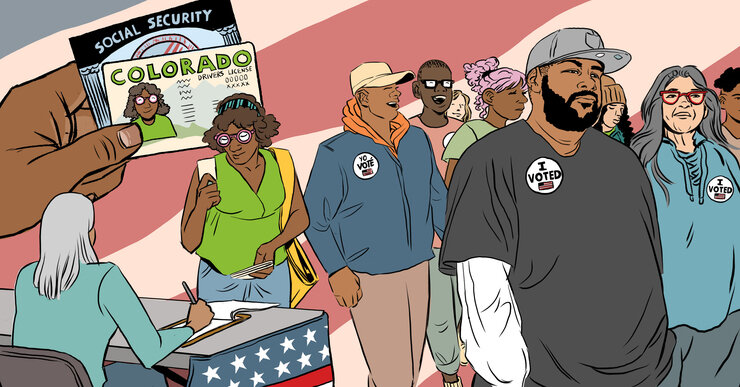
In 2019, Colorado restored the right to vote to people on parole — more than 11,000 people at the time. Three years later, outdated government forms handed to people leaving prison still said they couldn't. Only 27% of the nearly 30,000 affected people had registered to vote, compared to 88% statewide. The problem wasn't the law. It was misinformation baked into the systems people were supposed to trust on the way out.
I was part of the reporting and product team that investigated the gap and then built something to close it. On the data side, I vetted an analysis of parole records from the Colorado Department of Corrections joined with Secretary of State voter registration data to document the registration gap. On the product side, I co-created a comic-style explainer — illustrated by Zeke Peña — that told people on parole exactly how to register in plain, accessible language. The explainer ran ahead of the midterm primary as a practical resource for people who had been told, wrongly, that they couldn't vote.
Data analysis joining two state datasets — parole records and voter registration rolls — to quantify a gap that officials had not publicly acknowledged. A partnership with The Colorado Sun for the investigation. A community-centered editorial frame: the story started with Anthony Kent and his mother Teri Quintana, whose experience surfaced the problem in the first place. And a deliberate choice to follow the investigation with something useful — not just exposing the gap, but handing people the information they needed to act on it.
The day before publication, the Colorado Secretary of State updated the erroneous voter information form that had been misinforming people on parole for years. The explainer was distributed through Inside Wire — the first statewide prison radio station in the U.S. — reaching up to 14,000 incarcerated listeners across every Colorado Department of Corrections facility.